A Lake Charles mold inspection takes 60–90 minutes, and a good one produces a written scope naming the moisture source. Ask for any exploratory opening to be quoted at $300–$1,200 and agreed before anybody cuts — location, size, price, and patching.
What to settle in advance, what the visit measures, and what to keep at the end of it.
The four things to agree in advance
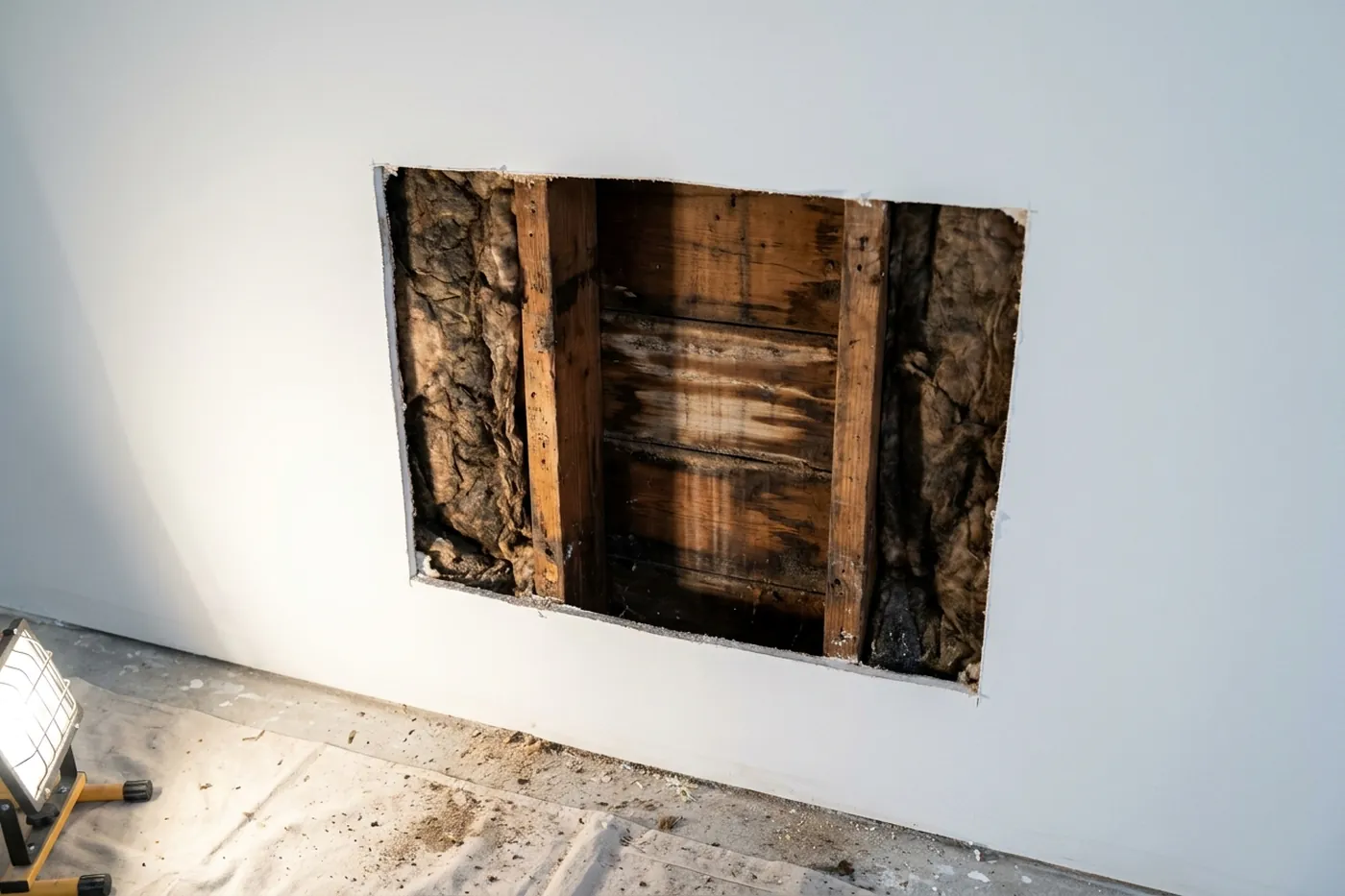
Opening a wall in somebody’s home is not a small thing, particularly a wall that was already rebuilt once. So none of it should be left to the day.
| Agreed beforehand | Why it is in writing |
|---|---|
| Where the opening goes | You and the specialist choose the room and the bay together, from the readings |
| How large it is | Typically a hand-sized cut, not a demolished wall |
| What it costs | $300–$1,200 depending on how many areas, stated as a number |
| Who patches it | Ask for it in writing, whether or not you hire the specialist for anything further |
The fourth row matters more than it looks. A company that opens a wall and leaves it open has created a reason to hire them. Do not accept that position.
What the inspection measures
- Moisture readings on the areas you are worried about, and on the ones you are not
- A comparison between what was rebuilt after 2020 and what was never touched
- Thermal imaging where a temperature difference will show wet material through a surface
- The air handler and accessible ductwork, because a system that ran through a wet house carries
- Where the water is coming from now, if anything is still active
What happens if it becomes a mold removal quote
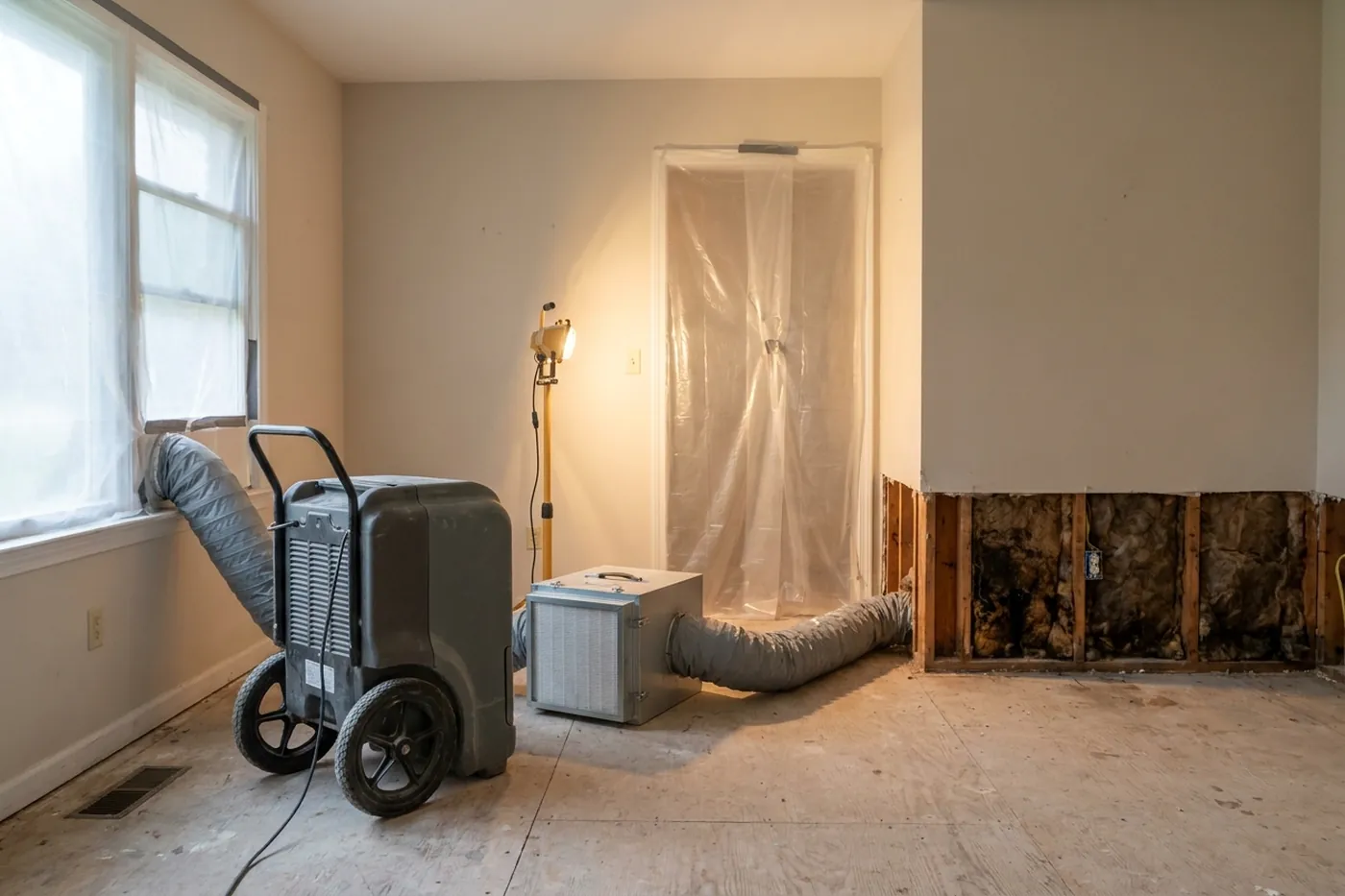
Where an opening finds growth, ask for a written mold removal scope. A good one names the affected bays, what comes out, what stays, and the drying target as a number, and says whether the cost of the opening is folded into it rather than charged twice.
Where it finds nothing, there is no scope to write and no mold removal to sell. That is a result, and it is the one a majority of repaired houses here get. The document you keep says what was measured and where, which is worth having on file whether you ever hire anybody.
What a reading can and cannot settle
A meter tells you material is wet. A thermal camera tells you where the wet material is. Neither tells you whether something is growing in the cavity, and any company implying otherwise is overselling its instruments.
That gap is precisely why the opening exists, and why an honest quote for it beats pretending the equipment closed the question. Where the readings come back dry across the board, there is nothing to open and a fair specialist says so.
What to ask for
- The readings, written down, with the locations they were taken
- A scope naming the moisture source in plain words, not the phrase “moisture intrusion”
- A drying target as a number, where drying is part of the work
- A statement of what the specialist would look for if you authorise an opening, and what it would cost
Already holding a bid from somebody else?
Have it out when the specialist arrives. There is one question that decides most of the price on repaired housing: does the document say what leaves the building, or only what gets treated? That distinction is nearly invisible until somebody points at it, and it is worth checking even if you go on to hire them.
The inspection, answered plainly
What gets agreed before anything is cut?
Four things in writing: where the opening goes, how large it is, what it costs, and who patches it. Sign off on all four before a blade touches your wall, so nothing is discovered mid-job that you had not already priced.
Is the first visit free?
Many local specialists don't charge for the first visit, but it depends on the company. Ask when the specialist calls, before they come out. A good one includes the moisture readings, the walk-through of previous repairs, and a written scope. Exploratory openings are separate; ask for them quoted in advance at $300-$1,200.
How long does it take?
Sixty to ninety minutes for the inspection itself. Reading a repaired house is slower than reading an undamaged one, because the inspection checks what was rebuilt against what was not, and that comparison is the part that produces the answer.
What if I say no to the opening?
Then ask for what the readings showed and what the specialist would have looked for in writing, and keep it. That is a legitimate outcome. Plenty of people want the measurements now and the decision later, and the document is useful either way.
What if nothing is found?
A fair specialist tells you, patches what was opened, and your total should be the opening cost. A clean finding should not turn into a preventive treatment. A house that is dry does not need a service, it needs to be left alone.
Book a Lake Charles mold inspection
If work was done on the house after 2020, tell us roughly what and roughly when — even “somebody replaced the ceiling, I do not know who” is useful. A great many houses here were repaired fast under conditions nobody chose, and what is behind that work is usually the question. A local specialist who serves Lake Charles will call you back.