Wall cavity mold removal in Lake Charles runs $2,000–$8,000, set by how many linear feet of wall must be opened. The growth sits on the cavity side — water running down inside a wall soaks insulation and framing while the painted face stays presentable.
Why walls hide this so well, how much actually has to come out, and the shortcut found most often behind fast repairs.
The face is not where the water went
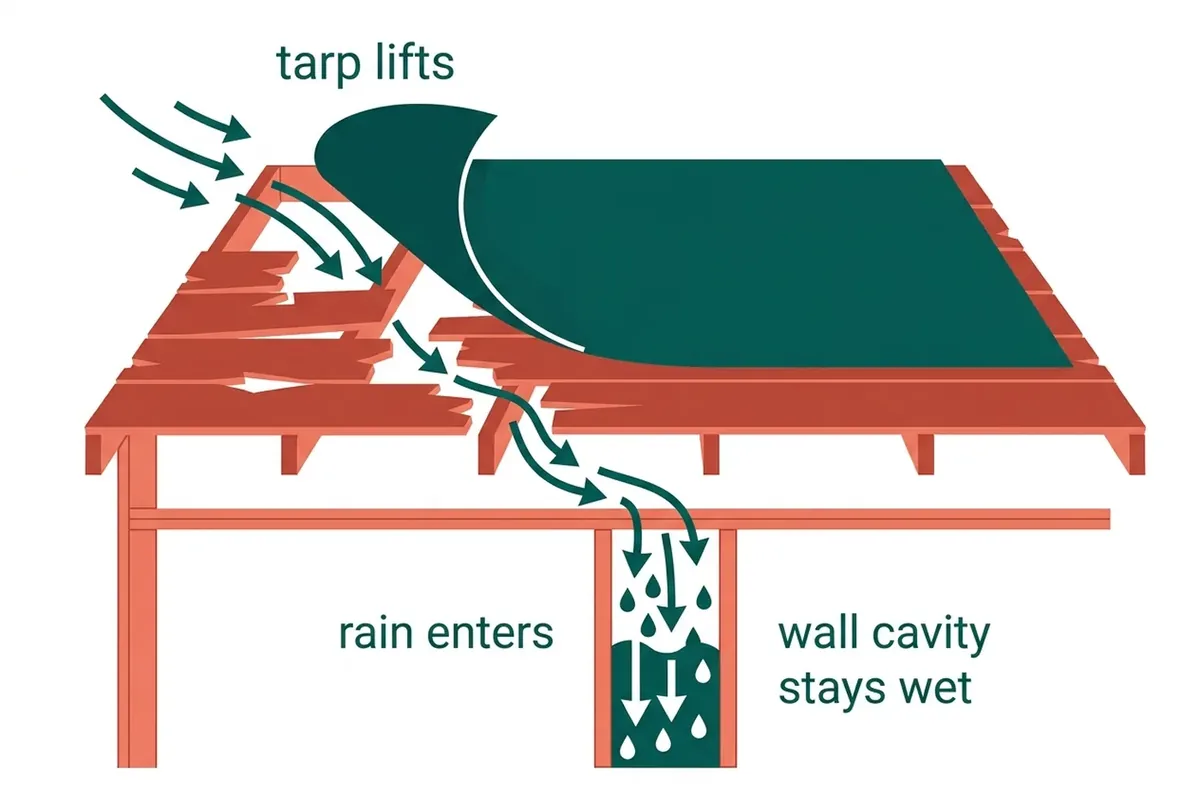
Wind-driven rain entering above a wall, or water tracking down from a damaged roof, travels inside the cavity. It wets the top plate, runs down the studs, and saturates the batt insulation on the way. The room side of the drywall may never look wet at all.
That is why a house can present perfectly well and still have a problem, and why a smell with no visible source is the symptom people report most. The growth is a quarter of an inch away from a wall you have looked at every day for four years.
How much has to come out
| Situation | Typical removal | Range |
|---|---|---|
| Water line low, one or two walls | Lower portion to a set height above the line | $2,000–$3,500 |
| Water entered from above, several walls | Upper sections plus affected framing bays | $3,500–$5,500 |
| Multiple rooms, extended exposure | Continuous work along affected runs | $5,500–$8,000 |
| Area already identified by an inspection opening | Tightly scoped — the guessing is done | Lower end |
| Whole room, floor to ceiling | Occasionally right, frequently oversold | Ask why |
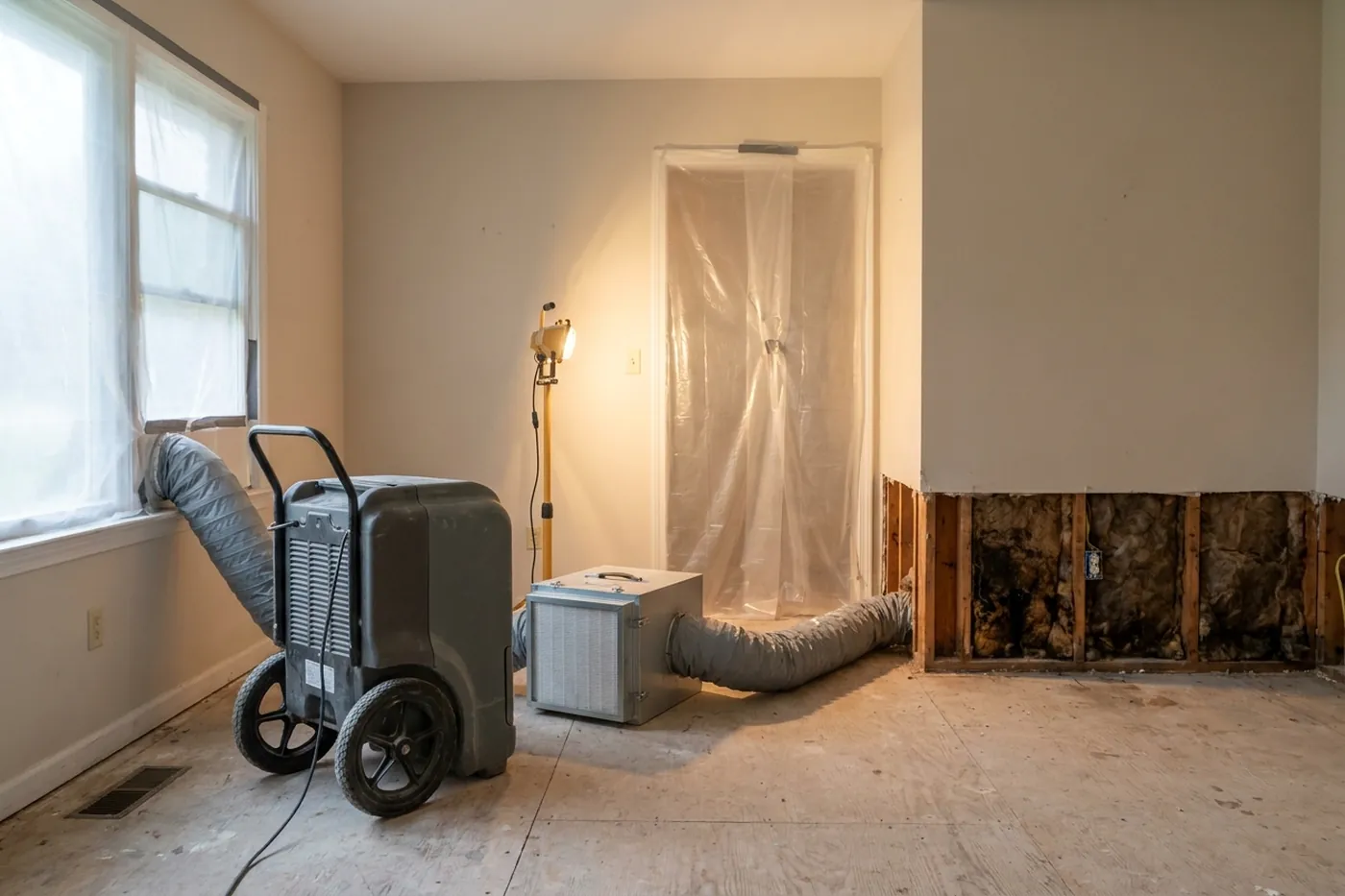
Removal follows the wet material rather than the room outline. If a scope proposes taking a whole room to the ceiling, the fair question is what evidence puts water at that height.
The shortcut found most often
Insulation left in. It is the single most common thing behind repairs made under pressure, and it is entirely understandable — pulling batt out adds a day, and in 2021 nobody had a day.
The problem is that batt holds water long after framing feels dry, and it cannot be restored once it has been saturated and sat. New drywall over wet insulation seals the moisture in with a food source and no airflow. Replacing it properly is inexpensive; the cost is time, which is exactly what was unavailable.
What a proper cavity scope contains
- Removal height stated as a measurement above the water line, not "as needed"
- Insulation removal named explicitly rather than assumed
- Framing treatment where growth is on the timber
- A drying target as a number, with readings before close-up
- The moisture source named — including where it is historic and already repaired
That last line matters here more than elsewhere. Where the source was a 2020 roof failure that has since been properly repaired, the scope should say so, because it means the cavity is being cleaned rather than the cause being chased.
Wall cavities, answered plainly
What does wall cavity mold removal cost in Lake Charles?
Most jobs run $2,000-$8,000. What decides it is how many linear feet of wall have to be opened and whether the framing needs treatment beyond cleaning. Where the affected area is already known from an inspection opening, the scope is much tighter and the price lower.
Why is the mold behind the drywall rather than on it?
Because that is the side that got wet. Water entering a wall from above or from wind-driven rain runs down inside the cavity, soaking the insulation and the framing while the painted face stays presentable. A wall can look fine for years with a cavity full of growth.
How would I know it is there?
A smell with no visible source is the most common sign, often strongest low down or near an outlet. Staining reappearing through fresh paint is another. Sometimes there is nothing at all until somebody opens it - which is why the inspection opening exists.
Does all the drywall have to come out?
Not all the drywall has to come out. Removal follows the wet material, not the room. Typically the lower portion of affected walls comes out to a set height above the water line, the cavity is cleared and dried, and the rest stays. Whole-room removal is occasionally right and frequently oversold.
What happens to the insulation?
It comes out where it was wet. Batt insulation holds water long after framing has dried and cannot be reliably restored, so leaving it in is the single most common shortcut found behind repairs done under pressure. It is also inexpensive to replace properly.
Book a Lake Charles mold inspection
If work was done on the house after 2020, tell us roughly what and roughly when — even “somebody replaced the ceiling, I do not know who” is useful. A great many houses here were repaired fast under conditions nobody chose, and what is behind that work is usually the question. A local specialist who serves Lake Charles will call you back.