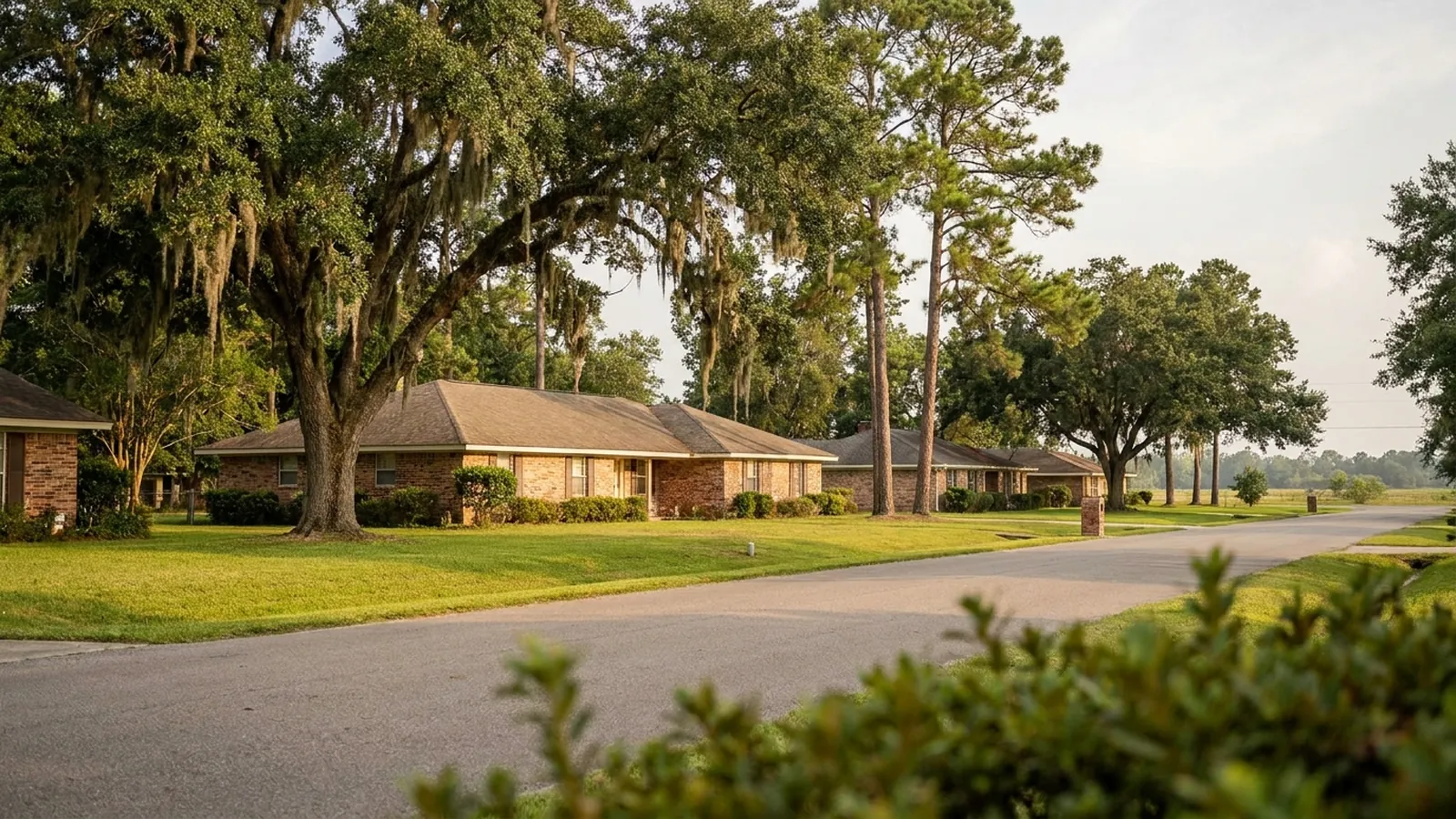
Checking a previous storm repair in Lake Charles starts with a inspection. Exploratory openings, where needed, run $300–$1,200; ask whether they fold into any remediation that follows. The inspection is looking for one thing: whether wet material was removed in 2021 or covered over.
Why this is a distinct local job, what gets opened and where, and the outcome where everything turns out sound.
Why this is its own job here
Southwest Louisiana took four federally declared disasters in nine months. Hurricane Laura came ashore on 27 August 2020 as a Category 4 with winds over 150 mph — the most powerful hurricane to strike Louisiana since the 1850s. Hurricane Delta followed in October, driving rain through roofs that had not yet been repaired. Winter Storm Uri arrived in February 2021. On 17 May 2021 the city took 12.49 inches of rain in a day, its heaviest single-day total in 41 years. If somebody needs an independent document rather than a remediator's findings, mold testing and inspection covers who writes one and what it should say.
The mold consequence was specific and well documented: Delta's wind lifted the blue tarps covering Laura's damage, heavy rain entered the houses beneath them, and the heat and humidity that followed made ideal conditions for mold and decay.
So repairs happened everywhere, at once, with far too few contractors. That is context, not blame. A homeowner in 2021 was choosing between the crew who could come and no crew at all.
What gets opened, and where
| Location | What it tells us |
|---|---|
| Low on a wall, near the floor | Whether the bottom plate carries a water line, and whether it is dry now |
| Inside a closet | Same information, somewhere nobody will look at the patch |
| Beside a window or door | Common entry points during wind-driven rain |
| Ceiling edge below a repaired roof section | Whether water tracked along framing before anyone got up there |
| Behind an air handler or in a return chase | Whether wet material sat next to the system moving air |
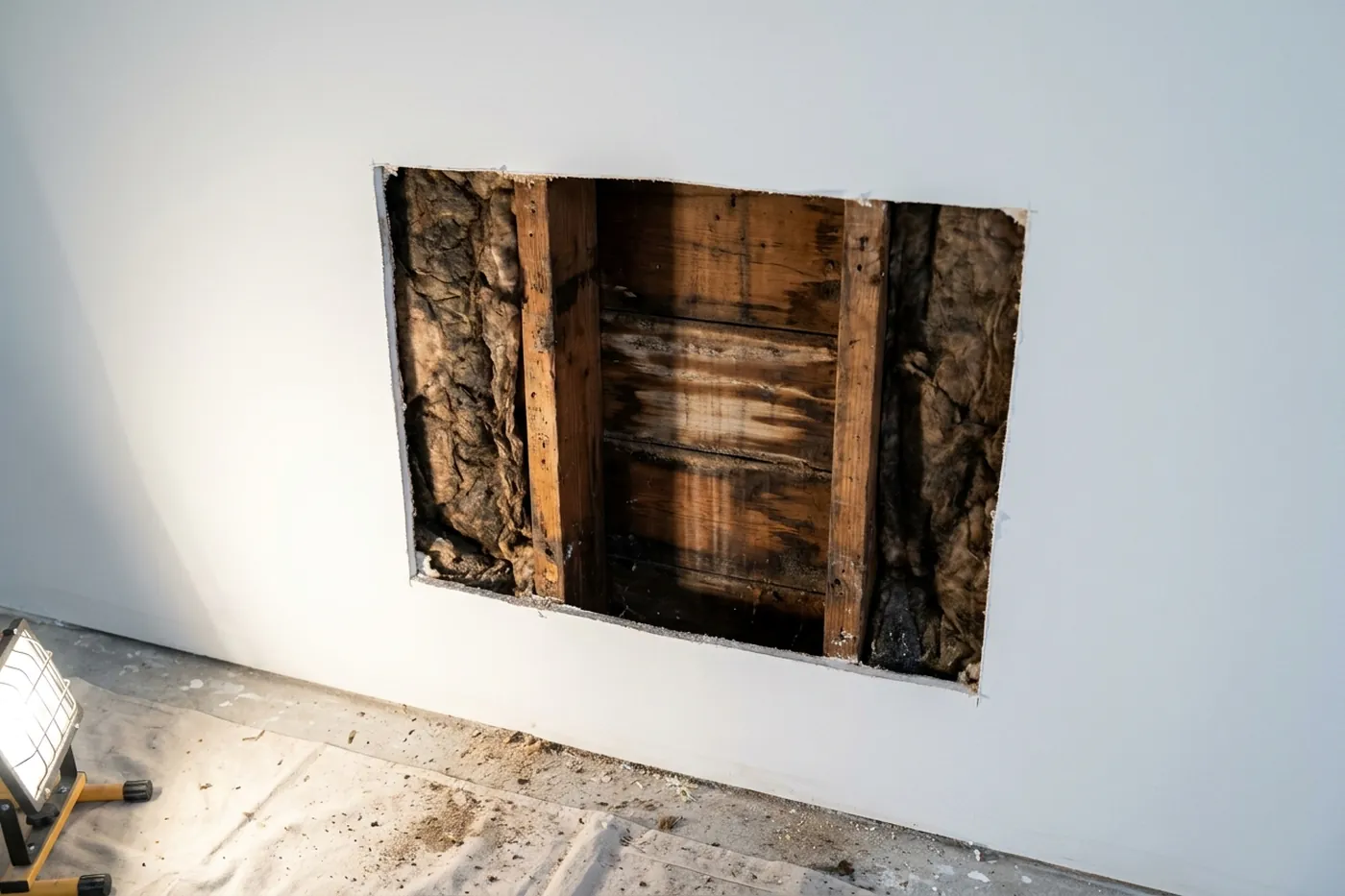
Openings are a few inches and get patched. This deliberately sits between guessing from the surface and pulling a room apart.
The five things to check behind the board
- Is the framing sound and dry now? A moisture reading, not an impression
- Was the insulation replaced or left in? Wet batt left in a cavity is the most common finding
- Is there staining on the back face of the new drywall? Which means it went up against something still wet
- Does the bottom plate show a water line? And how high it runs
- Is there growth on the cavity side? Which the room side will not show for years
When it turns out fine
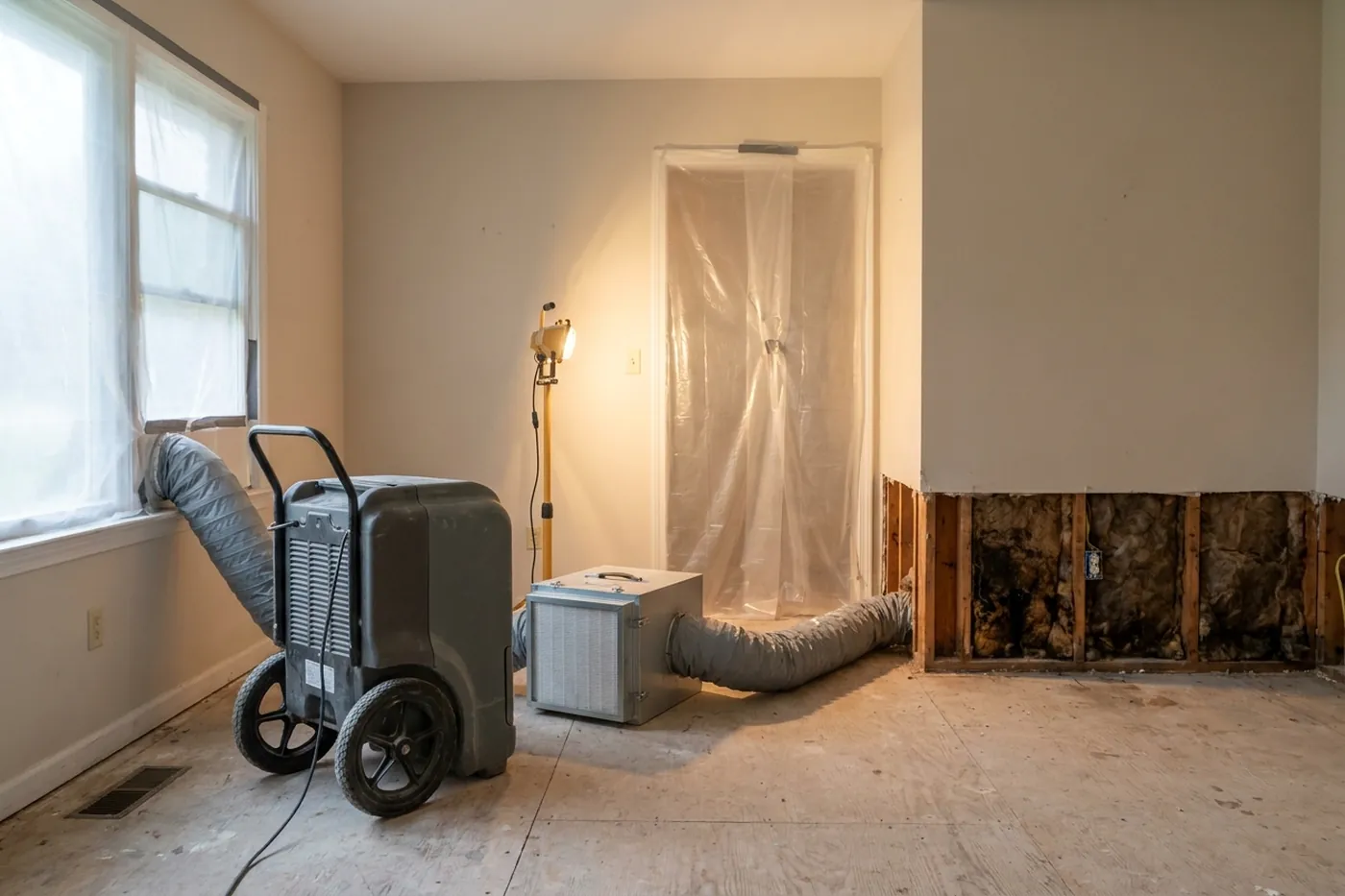
It does, regularly. Plenty of the work done here in 2021 was done properly by people working very hard in awful conditions, and a fair specialist patches the opening and says so.
That outcome is worth as much as the other one. A house you have been uneasy about since 2020, confirmed sound, is a real thing to buy for the price of an hour and a patch. Where it is not sound, the work usually runs into wall cavity removal rather than a whole-house scope, because the affected area is already known.
Checking a repair, answered plainly
What does it cost to check a previous repair?
Many local specialists don't charge for the inspection; ask when they call. Where exploratory openings are needed - small cuts in newer drywall to see the framing behind it, then patched - that work runs $300-$1,200 depending on how many areas are opened. If remediation follows, ask whether the opening cost folds into it.
Why would a 2021 repair be a problem?
Not because anybody was careless. Work was done during an unprecedented contractor shortage by crews who often came from elsewhere and left. Under those conditions, covering a wall was frequently the only option available on the day. The job now is to find out what is behind it.
How can I tell without opening anything?
Sometimes you cannot, and that is the honest answer. Staining coming back through new paint, a smell that never left, a room that feels different from the rest of the house - those point somewhere. But drywall hides its history well, and a small opening settles in minutes what months of guessing will not.
Will looking damage my house?
A good specialist cuts small, in inconspicuous places, and patches what was opened. An exploratory opening is a few inches, usually low on a wall or inside a closet. The alternative is either guessing or removing whole rooms, and this sits deliberately between the two.
What is the inspection actually looking for?
Whether wet material was removed or covered. Specifically: is the framing behind the new board sound and dry, was the insulation replaced or left in, is there staining on the back face of the drywall, and does the bottom plate show a water line.
What if it turns out to be fine?
Then the opening gets patched and you are told it is fine. That is a real outcome and it happens - plenty of repairs done here in 2021 were done properly by people working very hard in bad conditions.
Book a Lake Charles mold inspection
If work was done on the house after 2020, tell us roughly what and roughly when — even “somebody replaced the ceiling, I do not know who” is useful. A great many houses here were repaired fast under conditions nobody chose, and what is behind that work is usually the question. A local specialist who serves Lake Charles will call you back.