
A stain that returns through fresh paint means the mark is not on the surface. Material behind the board is wet now, or was wet when the board went up, and moisture carries discolouration through. Many local specialists don't charge for the inspection; an exploratory opening runs $300–$1,200.
Why paint cannot win this argument, how to tell an old mark from a live one, and when it really is just a bad patch.
What the returning stain is telling you
Paint is a surface. A stain bleeding through it is arriving from the other side of the board, carried by moisture, and no number of coats changes what is happening in the cavity.
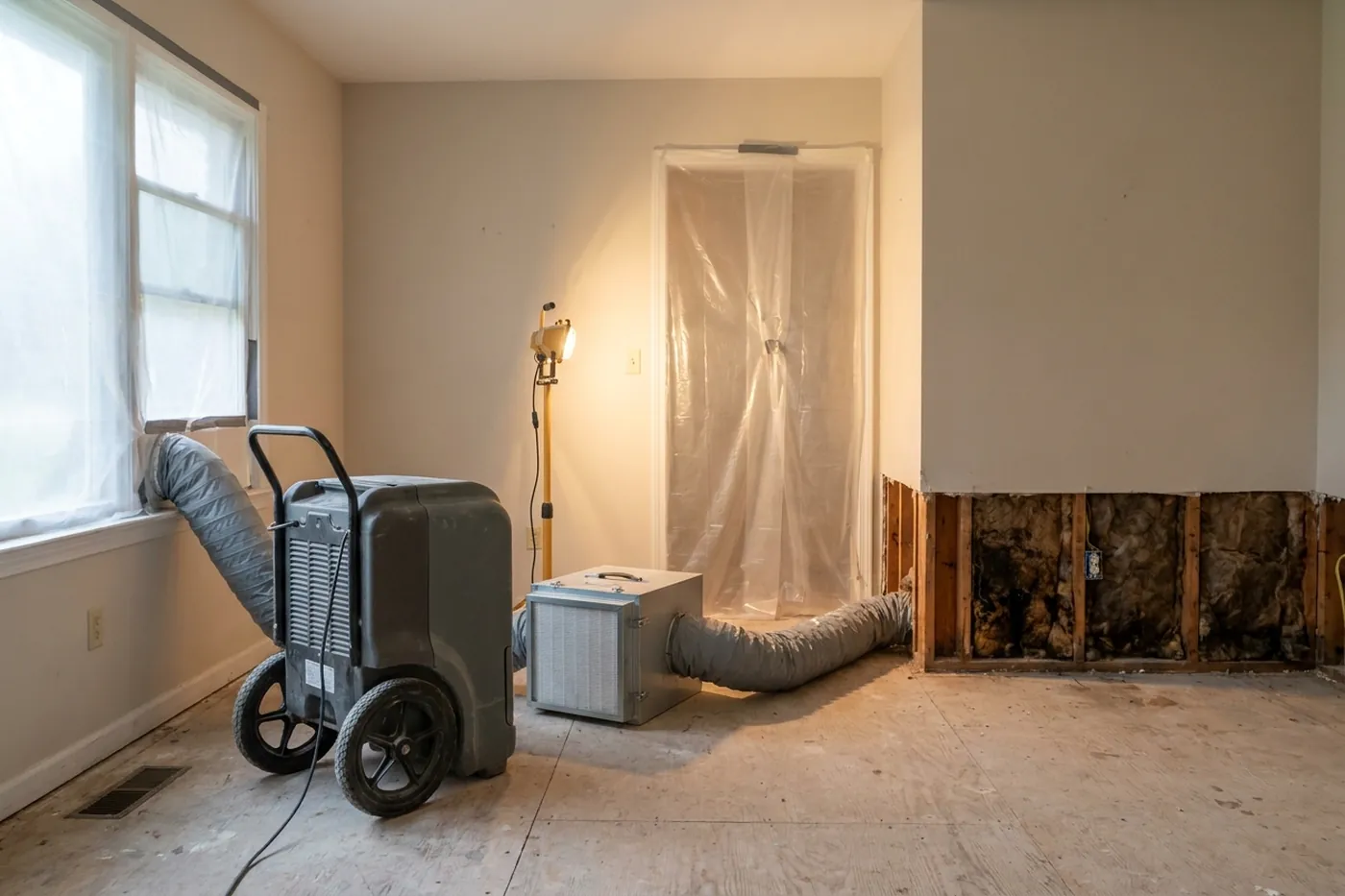
In this area that has a particular flavour. Where a wall was repaired quickly after 2020 or 2021, board sometimes went up against framing or insulation that had not fully dried — not through carelessness but because the alternative was leaving a house open. A mark reappearing through paintwork is frequently the first outward sign of that.
Old mark or live one
| Observation | Suggests |
|---|---|
| The mark is exactly the same size a month later | Historic — something that has stopped |
| It grows, darkens, or spreads at the edges | Live moisture behind the board |
| Stain-blocking primer held for years | Historic |
| Stain-blocker failed within months | Live — the product is not the problem |
| It follows a stud line or a horizontal band | Moisture, tracking the structure or a water level |
| It follows the outline of a repair patch | Possibly just insufficient primer over the patch |
That last row is real and worth ruling in. Not every returning mark is a moisture problem; some are a joint compound and primer problem. The two are distinguishable by shape, because bleed-through follows the patch and moisture follows the building.
The measurement that settles it
A moisture reading taken at the wall, and if that is ambiguous, a small opening. Both are quick, and between them they end a question that repainting will not resolve at any number of coats.
Where the reading comes back dry and the mark is stable, the honest answer is that a proper stain-blocking primer will hold and there is nothing else to do. Where it comes back wet, the work is usually in the cavity rather than on the wall, and the affected area is already located, which keeps the scope tight.
When it becomes a mold removal job
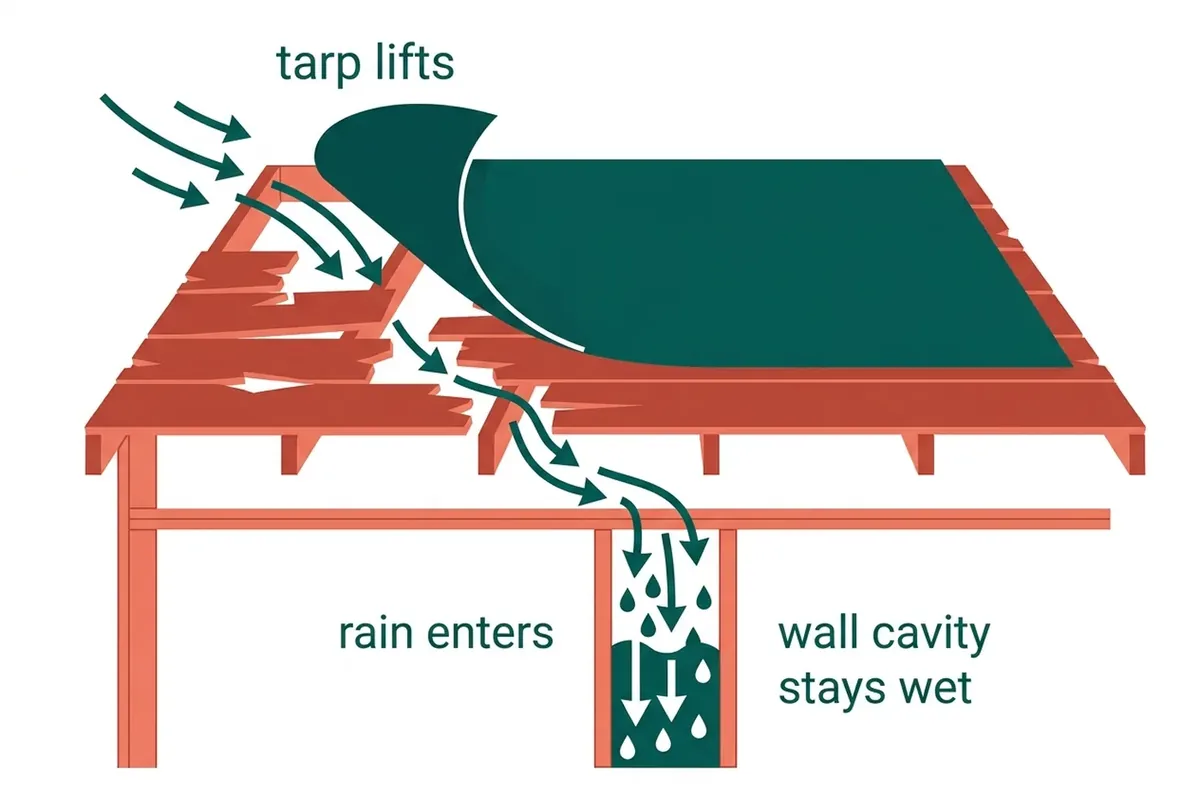
A wet cavity and a stain are not automatically a mold removal job. What decides it is whether material behind the board is growing rather than merely marked, and that is established by looking inside rather than by how bad the stain appears from the room.
Where growth is present, mold removal here is usually confined to the bays that are actually affected, because the opening has already located them. Where it is absent, the work is drying and correcting the source, which is a substantially smaller job. Both answers come from the same visit, and the second one is the better news.
Why this is worth acting on rather than living with
Not urgency — a damp cavity is not an emergency and it will keep while you get opinions. But it does not improve, and each repaint costs money that would have gone further at the actual cause. Three repaints and a wall that still marks is roughly the price of finding out properly.
Staining, answered plainly
Why does a stain keep coming back through new paint?
Because the mark is not on the surface. Something behind the board is still wet, or was wet when the board went up, and moisture is carrying discolouration through the coating. Painting over it treats the symptom on the side of the wall you can see.
Will stain-blocking primer fix it?
It can hide a mark whose cause has genuinely stopped - an old leak long since repaired, on material that is now dry. It will not hold against active moisture. If a properly applied stain-blocker fails within months, that is diagnostic rather than a product failure.
How do I tell an old stain from a live one?
Whether the material behind it is wet now, which is a moisture reading rather than an appearance. A dated photograph and a look in a month also helps: an old mark stays exactly the same size, and a live one grows or darkens.
What does it cost to find out?
Many local specialists don't charge for the inspection; a small exploratory opening runs $300-$1,200 where one is needed. Against repainting the same wall three times, that is usually the cheaper route as well as the faster one.
Could it just be a bad paint job?
Occasionally - insufficient primer over a repaired patch will bleed. What separates them is location and pattern. Bleed-through follows the patch outline. A moisture mark follows something else entirely: a stud line, a corner, a horizontal band at a former water level.
Book a Lake Charles mold inspection
If work was done on the house after 2020, tell us roughly what and roughly when — even “somebody replaced the ceiling, I do not know who” is useful. A great many houses here were repaired fast under conditions nobody chose, and what is behind that work is usually the question. A local specialist who serves Lake Charles will call you back.