Water damage restoration in Lake Charles runs $1,000–$8,000. The category of water drives the scope more than the volume, and mold can begin within 24–48 hours — at 57.49 inches of annual rain with high humidity, the building will not dry itself.
Why current water is a different job from the 2020 legacy, what a flood cut is, and what to photograph first.
Current water is a different job
Most of this site is about damage with a date in the past — the question being what was left behind and whether it was dealt with. This page is about the opposite situation: water entering now, where the clock is running and the first two days genuinely decide how large the job becomes.
The distinction matters because the urgency is different. A cavity that has been quietly damp since 2021 will keep for another fortnight while you get two quotes. A burst supply line will not.
Category over volume
Clean water from a supply line, reached quickly, is a drying exercise. Materials stay, equipment runs to a measured target, nothing is demolished.
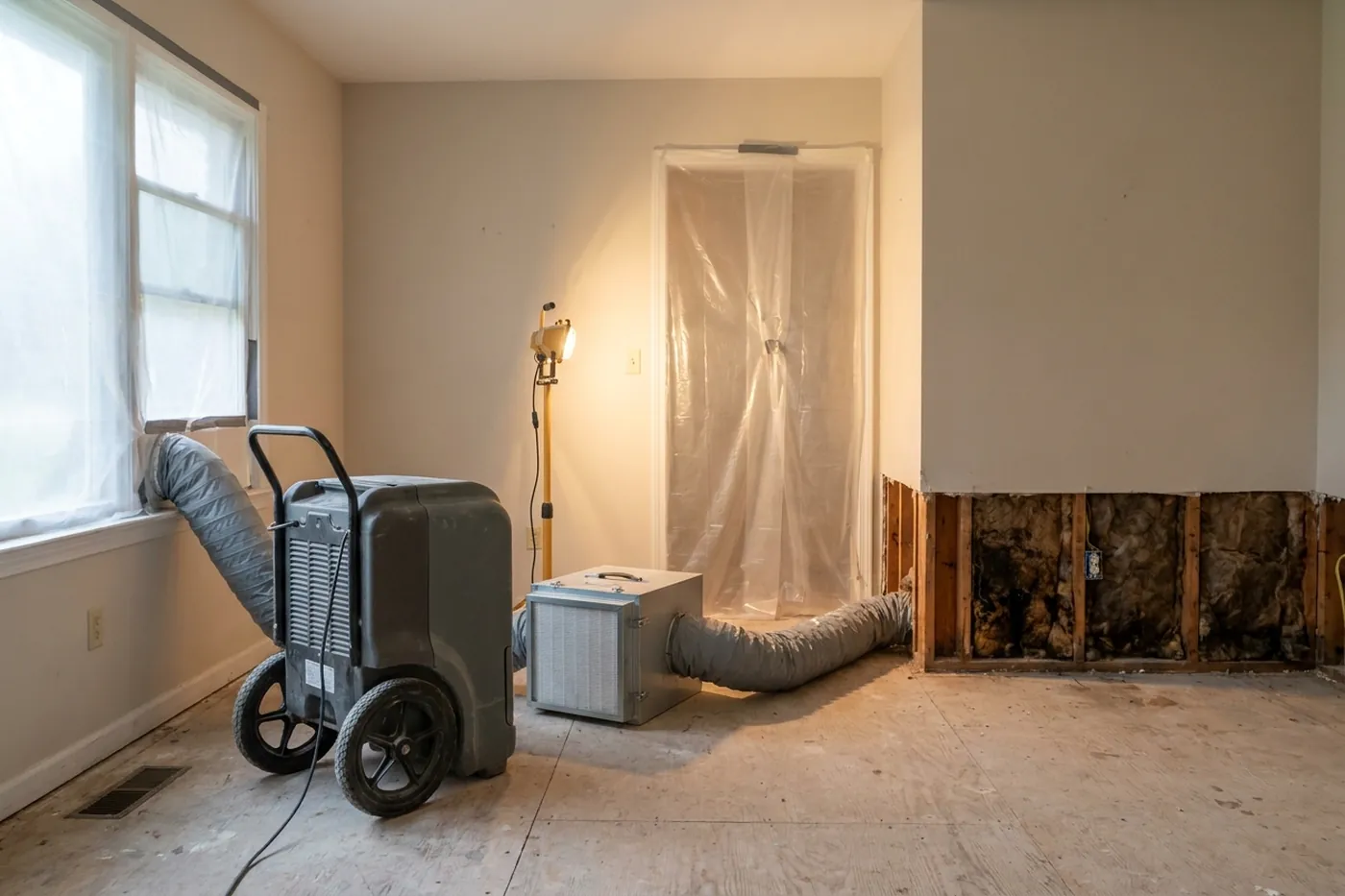
Contaminated water changes the answer for anything absorbent it reached. Drywall comes down, batts come out, carpet and its underlay go in the skip — none of it can be brought back to a state anybody should certify. A modest volume of dirty water routinely outscopes a much larger clean spill caught the same afternoon.
Why drying here is mechanical
For most of the year the air outside holds more moisture than the air you are trying to dry, so throwing the windows open works against you. On this coast the machines are doing the entire job, and airflow through the house is not a substitute for them.
Ask for the drying target as a number and the final readings before equipment leaves. Equipment pulled early from a structure that had not reached target is the most common quiet failure in restoration, and written numbers are what prevent it.
Where drying ends and mold removal begins
The line is whether growth has started. Water reached quickly enough is a drying job with no remediation at all, and that is the outcome worth paying for speed to reach. Past roughly 48 hours in this climate, some of what got wet is likely to have started, and the scope changes character.
Two things separate the jobs on a quote. Drying keeps materials in place and runs equipment to a measured target. Mold removal takes affected material out under containment and cleans what remains. A document that prices the second while describing the first is worth questioning before it is signed.
Photograph before anything moves
- Mark and photograph how high the water reached on each wall, with the date visible
- One wide frame per affected room, taken before anybody cuts anything
- Individual shots of ruined belongings — those are itemised separately on a claim
- The origin itself if you can see it: whether this was sudden or slow decides most outcomes
- Keep the part that failed. A burst length of pipe is an object, not an assertion
Restoration necessarily destroys this evidence. Ten minutes with a phone beats any argument afterward, and sudden accidental discharge is one of the few water causes standard policies commonly pay for — flooding needs separate coverage.
Water damage, answered plainly
What does water damage restoration cost in Lake Charles?
Budget $1,000-$8,000. What kind of water it was matters far more than how much: supply water reached inside a day stays a drying exercise, whereas anything that sat, or came in dirty, means the absorbent materials leave the building.
How fast do I need to move?
Growth can start on soaked organic material inside a day or two. This is not a climate where a house dries on its own inside that window - with 57.49 inches falling on it a year and the outdoor air already loaded, throwing the windows wide brings more water in than it carries out.
Is this different from the storm work?
This is different from the storm work, and it is worth separating. Storm damage from 2020 and 2021 is historic - the water event is over and the question is what was left behind. A burst line or an appliance failure today is current, and the first 48 hours genuinely change how big it becomes.
What is a flood cut?
Taking the wallboard back to a marked line above where the water reached, so what sits in the cavity can be dried out or taken away. People find it drastic; it is routine. Batt stays sodden long after the board face reads dry, and that is the gap where growth begins.
Will insurance cover it?
Sudden accidental discharge - a burst supply line - is commonly covered under a standard policy. Flooding needs separate flood coverage. Gradual leaks are usually excluded. Document everything with dated photographs before removal begins, because restoration destroys the evidence.
What has to happen in the first 48 hours?
Southwest Louisiana has more recent experience of water in houses than almost anywhere, and the useful lessons from 2020 and 2021 are practical ones about sequence and speed.
| Situation | What it means | How it goes in this market |
|---|---|---|
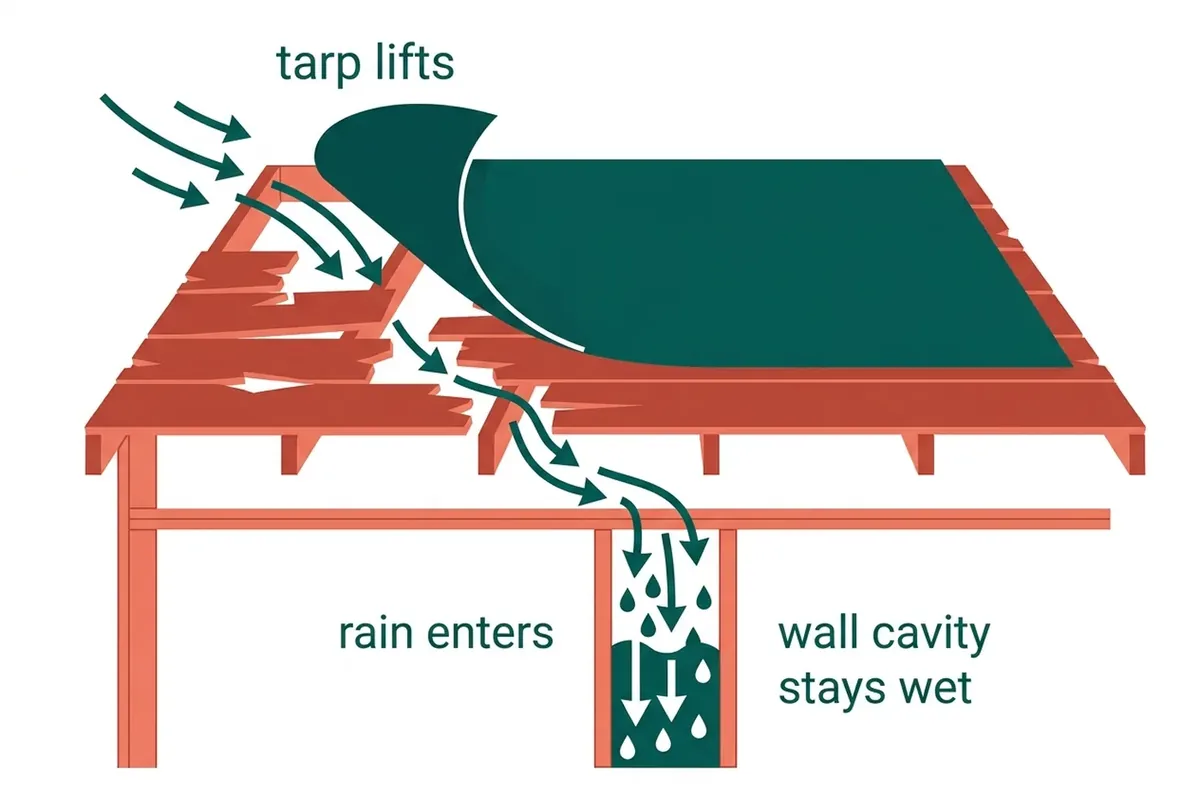
| Stop and extract | The source closed and standing water out the same day | A tarp is part of the water stoppage — and checking it after the next wind is too |
| Dry to a standard | Monitored drying against readings from unaffected material | At 57 inches a year, drying here is equipment work with a finish line, not a fan and hope |
| Remove what stayed wet | Saturated porous materials out before they colonise | Materials wetted more than once are past saving more often than they look |
| Verify before rebuild | Moisture readings decide closure — never the calendar | Where repairs were made quickly in 2020-21, verifying what is behind them settles the question |
Louisiana requires a state Mold Remediation classification for work above $7,500 — a register worth checking whoever you hire, for water work as much as mold work.
Book a Lake Charles mold inspection
If work was done on the house after 2020, tell us roughly what and roughly when — even “somebody replaced the ceiling, I do not know who” is useful. A great many houses here were repaired fast under conditions nobody chose, and what is behind that work is usually the question. A local specialist who serves Lake Charles will call you back.